
 Custom Design. Factory Made. Globally Delivered CREAX
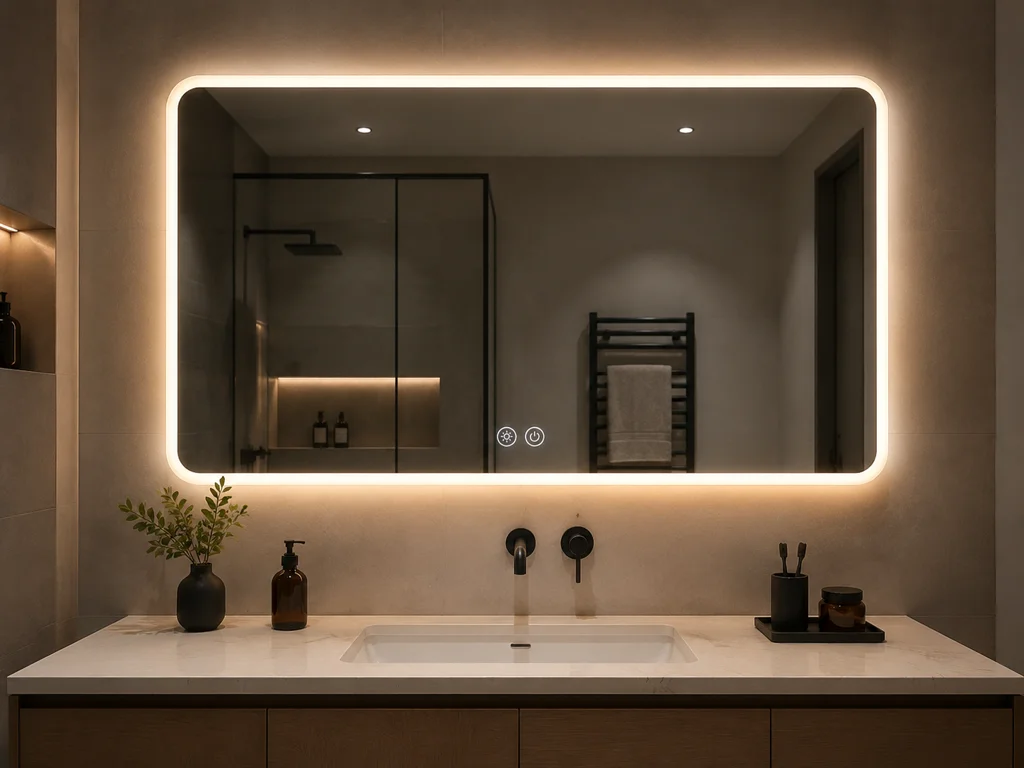

The Complete Guide to Mirror Touch Switch Modules: Technology, Manufacturing, and Customization
Explore the technology, manufacturing quality, supplier logistics, and customization of mirror touch switch modules, including specs, installation tips, and smart home trends.
The Complete Guide to Mirror Touch Switch Modules: Technology, Manufacturing, and Customization
In modern architectural and interior design, the mirror touch switch module has emerged as a defining element of sophisticated user interfaces. This comprehensive guide examines the technical architecture, manufacturing standards, and customization pathways of these intelligent switching devices. From capacitive sensing principles to IP-rated waterproofing, we explore how a high-quality mirror touch switch module transforms ordinary glass surfaces into responsive control panels. Whether you are an OEM buyer, an interior designer, or a facility manager, understanding the nuances of a mirror touch switch module manufacturer’s quality control and a mirror touch switch module supplier’s logistics is essential for project success.
Understanding the Core Technology of Mirror Touch Switch Modules
At its heart, a mirror touch switch module operates on the principle of capacitive sensing, which detects the electrical capacitance change when a human finger approaches or touches the sensor area. Unlike mechanical switches that rely on physical movement, these modules use a conductive layer—typically Indium Tin Oxide (ITO) or silver nano-wire—coated on the reverse side of a mirror glass or acrylic panel. The module\\\\\\\\\\\\\\\\\\\\\\\\\\\\\\\\\\\\\\\\\\\\\\\\\\\\\\\\\\\\\\\\\\\\\\\\\\\\\\\\\\\\\\\\\\\\\\\\\\\\\\\\\\\\\\\\\\\\\\\\\\\\\\\\\\\\\\\\\\\\\\\\\\\\\\\\\\\\\\\\\\\\\\\\\\\\\\\\\\\\\\\\\\\\\\\\\\\\\\\\\\\\\\\\\\\\\\\\\\\\\\\\\\\\\\\\\\\\\\\\\\\\\\\\\\\\\\\'s controller chip, often an 8-bit or 32-bit MCU, continuously monitors the capacitance levels across multiple channels. When a user touches the designated icon area, the capacitance shifts, triggering a relay or MOSFET output that controls the connected load, such as LED lighting, exhaust fans, or motorized blinds.
One of the critical advantages of this technology is its immunity to false triggers. Advanced modules incorporate adaptive algorithms that filter out environmental noise, humidity changes, and electromagnetic interference. For instance, a typical 2-channel mirror touch switch module operates at a sensing frequency of 100 kHz to 200 kHz, with a response time of less than 80 milliseconds. The operating voltage commonly ranges from 100-240V AC for mains-powered units, while low-voltage variants (12V or 24V DC) are preferred for LED strip applications. The load capacity varies significantly; a standard module can handle resistive loads up to 10A, while inductive loads (like motors) are limited to 3A to prevent back-EMF damage.
Furthermore, the durability of these modules is a direct result of their solid-state design. With no moving parts, the mechanical lifespan extends beyond 1,000,000 cycles, compared to 50,000 cycles for traditional tactile switches. The glass surface, typically 4mm or 5mm tempered glass, provides a scratch-resistant and easy-to-clean interface. In terms of environmental sealing, many modules achieve an IP65 rating on the front face, meaning they are dust-tight and protected against low-pressure water jets, making them suitable for bathroom and kitchen installations. The rear housing, often made of flame-retardant ABS plastic (UL94 V-0 rated), protects the PCB from moisture ingress when properly gasketed.
It is also essential to understand the difference between self-capacitance and mutual-capacitance designs. Self-capacitance modules measure the capacitance of each electrode relative to ground, which is simple and cost-effective for single-touch applications. Mutual-capacitance, on the other hand, measures the coupling between two electrodes, enabling multi-touch gestures and better water rejection. For a premium mirror touch switch module, mutual-capacitance is often preferred because it allows for slider controls (dimming) and proximity sensing. When selecting a module, always verify the number of touch channels (2, 4, 6, or 8) and whether the controller supports I2C or UART communication for integration with smart home systems like Zigbee or Wi-Fi gateways.
Evaluating a Mirror Touch Switch Module Manufacturer: Key Quality Metrics
Choosing the right mirror touch switch module manufacturer is a decision that directly impacts product reliability and brand reputation. A reputable manufacturer will adhere to strict international standards, including CE (European Conformity), UL (Underwriters Laboratories), and RoHS (Restriction of Hazardous Substances). These certifications are not mere stickers; they represent rigorous testing for electrical safety, thermal endurance, and environmental compliance. For instance, a CE-certified module must pass the Low Voltage Directive (LVD) 2014/35/EU and the Electromagnetic Compatibility (EMC) Directive 2014/30/EU, ensuring that the device does not emit harmful interference and is immune to external disturbances.
Another critical metric is the manufacturer\\\\\\\\\\\\\\\\\\\\\\\\\\\\\\\\\\\\\\\\\\\\\\\\\\\\\\\\\\\\\\\\\\\\\\\\\\\\\\\\\\\\\\\\\\\\\\\\\\\\\\\\\\\\\\\\\\\\\\\\\\\\\\\\\\\\\\\\\\\\\\\\\\\\\\\\\\\\\\\\\\\\\\\\\\\\\\\\\\\\\\\\\\\\\\\\\\\\\\\\\\\\\\\\\\\\\\\\\\\\\\\\\\\\\\\\\\\\\\\\\\\\\\\\\\\\\\\'s in-house testing capability. Leading manufacturers operate environmental chambers that simulate extreme conditions: high temperature (85°C), low temperature (-40°C), and high humidity (95% RH non-condensing). They also perform accelerated life tests, running the relay switching at full load for 100,000 cycles continuously. A transparent manufacturer will provide a detailed test report upon request, showing the waveform of the touch sensing signal and the insulation resistance (typically >100MΩ at 500V DC). Furthermore, the quality of the PCB is paramount. Look for boards with an FR-4 grade, 1.6mm thickness, and ENIG (Electroless Nickel Immersion Gold) surface finish, which offers superior corrosion resistance and solderability compared to HASL (Hot Air Solder Leveling).
Supply chain transparency is another differentiator. A reliable manufacturer will disclose the origin of critical components, such as the touch IC (e.g., from Cypress, Microchip, or Holtek) and the relay (e.g., from Omron or Panasonic). This traceability ensures that you are not receiving substandard or counterfeit parts. Additionally, the manufacturer\\\\\\\\\\\\\\\\\\\\\\\\\\\\\\\\\\\\\\\\\\\\\\\\\\\\\\\\\\\\\\\\\\\\\\\\\\\\\\\\\\\\\\\\\\\\\\\\\\\\\\\\\\\\\\\\\\\\\\\\\\\\\\\\\\\\\\\\\\\\\\\\\\\\\\\\\\\\\\\\\\\\\\\\\\\\\\\\\\\\\\\\\\\\\\\\\\\\\\\\\\\\\\\\\\\\\\\\\\\\\\\\\\\\\\\\\\\\\\\\\\\\\\\\\\\\\\\'s production capacity and lead time are crucial for project planning. A mid-sized manufacturer with SMT (Surface Mount Technology) lines can typically produce 5,000 to 10,000 modules per week. However, for large-scale projects, you should verify their ability to handle peak orders without compromising on quality. Many top-tier manufacturers implement a 100% functional test before packaging, where each module is connected to a simulated load and tested for all touch channels, LED indicators, and relay switching.
Finally, consider the manufacturer\\\\\\\\\\\\\\\\\\\\\\\\\\\\\\\\\\\\\\\\\\\\\\\\\\\\\\\\\\\\\\\\\\\\\\\\\\\\\\\\\\\\\\\\\\\\\\\\\\\\\\\\\\\\\\\\\\\\\\\\\\\\\\\\\\\\\\\\\\\\\\\\\\\\\\\\\\\\\\\\\\\\\\\\\\\\\\\\\\\\\\\\\\\\\\\\\\\\\\\\\\\\\\\\\\\\\\\\\\\\\\\\\\\\\\\\\\\\\\\\\\\\\\\\\\\\\\\'s R&D capability. The best partners are not just order-takers; they are solution providers. They should be able to assist with custom firmware development, such as adjusting the touch sensitivity threshold or implementing a delayed-off timer. They should also offer design-for-manufacturing (DFM) feedback on your glass layout, ensuring that the touch icons are printed with the correct conductive ink spacing. When evaluating a potential manufacturer, ask for a pre-production sample (golden sample) and subject it to your own drop test, temperature cycling, and ESD (Electrostatic Discharge) testing (up to ±8kV contact discharge). A manufacturer who willingly shares their failure analysis data and corrective action reports demonstrates a mature quality management system.
The Role of a Mirror Touch Switch Module Supplier in Project Logistics
While the manufacturer builds the product, the mirror touch switch module supplier bridges the gap between production and installation. A supplier\\\\\\\\\\\\\\\\\\\\\\\\\\\\\\\\\\\\\\\\\\\\\\\\\\\\\\\\\\\\\\\\\\\\\\\\\\\\\\\\\\\\\\\\\\\\\\\\\\\\\\\\\\\\\\\\\\\\\\\\\\\\\\\\\\\\\\\\\\\\\\\\\\\\\\\\\\\\\\\\\\\\\\\\\\\\\\\\\\\\\\\\\\\\\\\\\\\\\\\\\\\\\\\\\\\\\\\\\\\\\\\\\\\\\\\\\\\\\\\\\\\\\\\\\\\\\\\'s value proposition extends beyond mere distribution; it includes inventory management, technical support, and after-sales service. For international buyers, the supplier’s ability to handle export documentation, Incoterms (e.g., FOB, CIF, DDP), and customs clearance is vital. A competent supplier will have a dedicated logistics team that coordinates with freight forwarders to ensure that goods are shipped in anti-static packaging and moisture-barrier bags with desiccant, preventing corrosion during transit, especially on sea freight routes that take 30-45 days.
Inventory availability is a significant factor. If you are a contractor working on a tight deadline, you cannot afford a 4-week lead time for a standard module. A good supplier maintains a safety stock of popular SKUs, such as 4-channel and 6-channel modules with standard white LED backlighting. They should be able to offer mixed-container loading, allowing you to combine different module variants in one shipment to optimize freight costs. Moreover, the supplier should provide clear, bilingual documentation, including the datasheet, user manual, and wiring diagram. In many cases, the supplier also offers a technical hotline or WhatsApp support to assist electricians on-site with wiring questions, which can significantly reduce installation errors.
Another critical role of the supplier is quality assurance on the receiving end. Reputable suppliers perform a pre-shipment inspection (PSI) based on the ANSI/ASQ Z1.4 sampling standard. They check for visual defects, verify the correct silk-screen printing of icons, and test a random sample for electrical continuity. This step is particularly important when dealing with custom mirror touch switch modules, as the customization process involves multiple handoffs between the glass fabricator, the printing shop, and the module assembler. A reliable supplier will act as the single point of contact, coordinating these parties to ensure that the final product matches your approved sample. They will also manage the \\\\\\\\\\\\\\\\\\\\\\\\\\\\\\\\\\\\\\\\\\\\\\\\\\\\\\\\\\\\\\\\\\\\\\\\\\\\\\\\\\\\\\\\\\\\\\\\\\\\\\\\\\\\\\\\\\\\\\\\\\\\\\\\\\\\\\\\\\\\\\\\\\\\\\\\\\\\\\\\\\\\\\\\\\\\\\\\\\\\\\\\\\\\\\\\\\\\\\\\\\\\\\\\\\\\\\\\\\\\\\\\\\\\\\\\\\\\\\\\\\\\\\\\\\\\\\\"first article inspection\\\\\\\\\\\\\\\\\\\\\\\\\\\\\\\\\\\\\\\\\\\\\\\\\\\\\\\\\\\\\\\\\\\\\\\\\\\\\\\\\\\\\\\\\\\\\\\\\\\\\\\\\\\\\\\\\\\\\\\\\\\\\\\\\\\\\\\\\\\\\\\\\\\\\\\\\\\\\\\\\\\\\\\\\\\\\\\\\\\\\\\\\\\\\\\\\\\\\\\\\\\\\\\\\\\\\\\\\\\\\\\\\\\\\\\\\\\\\\\\\\\\\\\\\\\\\\\" (FAI) report, documenting the dimensions, material specs, and functional parameters for your records.
Finally, consider the supplier’s return and warranty policy. A standard warranty is typically 2 years from the date of shipment, covering defects in materials and workmanship. However, the supplier should have a clear RMA (Return Merchandise Authorization) process. For instance, if you experience a 1% failure rate, the supplier should replace the defective units without excessive shipping costs. The best suppliers also offer a \\\\\\\\\\\\\\\\\\\\\\\\\\\\\\\\\\\\\\\\\\\\\\\\\\\\\\\\\\\\\\\\\\\\\\\\\\\\\\\\\\\\\\\\\\\\\\\\\\\\\\\\\\\\\\\\\\\\\\\\\\\\\\\\\\\\\\\\\\\\\\\\\\\\\\\\\\\\\\\\\\\\\\\\\\\\\\\\\\\\\\\\\\\\\\\\\\\\\\\\\\\\\\\\\\\\\\\\\\\\\\\\\\\\\\\\\\\\\\\\\\\\\\\\\\\\\\\"dead-on-arrival\\\\\\\\\\\\\\\\\\\\\\\\\\\\\\\\\\\\\\\\\\\\\\\\\\\\\\\\\\\\\\\\\\\\\\\\\\\\\\\\\\\\\\\\\\\\\\\\\\\\\\\\\\\\\\\\\\\\\\\\\\\\\\\\\\\\\\\\\\\\\\\\\\\\\\\\\\\\\\\\\\\\\\\\\\\\\\\\\\\\\\\\\\\\\\\\\\\\\\\\\\\\\\\\\\\\\\\\\\\\\\\\\\\\\\\\\\\\\\\\\\\\\\\\\\\\\\\" (DOA) swap, where they ship replacements immediately before receiving the returned items, minimizing your project downtime. When selecting a supplier, ask for client references from your industry—for example, a hotel fit-out company or a bathroom fixture brand—to verify their track record in handling large-scale projects.
Custom Mirror Touch Switch Module: Design and Specification Process
The demand for custom mirror touch switch modules has surged as architects seek unique aesthetics that match specific interior themes. A custom module goes beyond simply changing the icon labels; it involves tailoring the physical dimensions, glass color, LED backlight color, and even the touch logic. The design process begins with a thorough requirements gathering. You must define the number of channels (e.g., 2 for a bathroom mirror, 8 for a smart wardrobe), the load type (resistive vs. inductive), and the mounting method (surface-mounted, recessed, or behind a full-length mirror). A critical specification is the glass thickness and whether it will be back-painted. If the glass is painted, the touch sensor must be calibrated to sense through the paint layer, which can reduce sensitivity by up to 30%.
Once the requirements are clear, the manufacturer\\\\\\\\\\\\\\\\\\\\\\\\\\\\\\\\\\\\\\\\\\\\\\\\\\\\\\\\\\\\\\\\\\\\\\\\\\\\\\\\\\\\\\\\\\\\\\\\\\\\\\\\\\\\\\\\\\\\\\\\\\\\\\\\\\\\\\\\\\\\\\\\\\\\\\\\\\\\\\\\\\\\\\\\\\\\\\\\\\\\\\\\\\\\\\\\\\\\\\\\\\\\\\\\\\\\\\\\\\\\\\\\\\\\\\\\\\\\\\\\\\\\\\\\\\\\\\\'s engineering team will create a technical drawing, including the PCB outline and the touch pad layout. The touch pads are typically circular or rectangular, with a minimum diameter of 15mm to ensure reliable triggering. The spacing between adjacent pads should be at least 10mm to prevent cross-talk. The LED backlighting, usually SMD 0603 or 0805 LEDs, can be customized in terms of color (warm white, cool white, blue, or RGB) and brightness (adjustable via PWM). For a premium feel, many designers opt for a \\\\\\\\\\\\\\\\\\\\\\\\\\\\\\\\\\\\\\\\\\\\\\\\\\\\\\\\\\\\\\\\\\\\\\\\\\\\\\\\\\\\\\\\\\\\\\\\\\\\\\\\\\\\\\\\\\\\\\\\\\\\\\\\\\\\\\\\\\\\\\\\\\\\\\\\\\\\\\\\\\\\\\\\\\\\\\\\\\\\\\\\\\\\\\\\\\\\\\\\\\\\\\\\\\\\\\\\\\\\\\\\\\\\\\\\\\\\\\\\\\\\\\\\\\\\\\\"hidden until lit\\\\\\\\\\\\\\\\\\\\\\\\\\\\\\\\\\\\\\\\\\\\\\\\\\\\\\\\\\\\\\\\\\\\\\\\\\\\\\\\\\\\\\\\\\\\\\\\\\\\\\\\\\\\\\\\\\\\\\\\\\\\\\\\\\\\\\\\\\\\\\\\\\\\\\\\\\\\\\\\\\\\\\\\\\\\\\\\\\\\\\\\\\\\\\\\\\\\\\\\\\\\\\\\\\\\\\\\\\\\\\\\\\\\\\\\\\\\\\\\\\\\\\\\\\\\\\\" effect, where the icons are invisible when the light is off and glow softly when the module is powered. This is achieved by using a semi-transparent conductive ink for the icons, which matches the mirror\\\\\\\\\\\\\\\\\\\\\\\\\\\\\\\\\\\\\\\\\\\\\\\\\\\\\\\\\\\\\\\\\\\\\\\\\\\\\\\\\\\\\\\\\\\\\\\\\\\\\\\\\\\\\\\\\\\\\\\\\\\\\\\\\\\\\\\\\\\\\\\\\\\\\\\\\\\\\\\\\\\\\\\\\\\\\\\\\\\\\\\\\\\\\\\\\\\\\\\\\\\\\\\\\\\\\\\\\\\\\\\\\\\\\\\\\\\\\\\\\\\\\\\\\\\\\\\'s reflectivity when inactive.
The next step is prototyping. A reputable manufacturer will produce a small batch of 5-10 samples using the exact production process. This prototype phase is crucial for validating the touch sensitivity. For example, if the mirror glass is 6mm thick, the sensor\\\\\\\\\\\\\\\\\\\\\\\\\\\\\\\\\\\\\\\\\\\\\\\\\\\\\\\\\\\\\\\\\\\\\\\\\\\\\\\\\\\\\\\\\\\\\\\\\\\\\\\\\\\\\\\\\\\\\\\\\\\\\\\\\\\\\\\\\\\\\\\\\\\\\\\\\\\\\\\\\\\\\\\\\\\\\\\\\\\\\\\\\\\\\\\\\\\\\\\\\\\\\\\\\\\\\\\\\\\\\\\\\\\\\\\\\\\\\\\\\\\\\\\\\\\\\\\'s detection threshold must be adjusted. The manufacturer will use a variable capacitor to simulate a finger touch and measure the signal-to-noise ratio (SNR). A good SNR is above 10:1; anything less may result in intermittent triggering. During this phase, you should also test the module with your actual load. For instance, if you are switching a 100W LED driver, the inrush current might be 20A for a few microseconds, which could weld the relay contacts if the relay\\\\\\\\\\\\\\\\\\\\\\\\\\\\\\\\\\\\\\\\\\\\\\\\\\\\\\\\\\\\\\\\\\\\\\\\\\\\\\\\\\\\\\\\\\\\\\\\\\\\\\\\\\\\\\\\\\\\\\\\\\\\\\\\\\\\\\\\\\\\\\\\\\\\\\\\\\\\\\\\\\\\\\\\\\\\\\\\\\\\\\\\\\\\\\\\\\\\\\\\\\\\\\\\\\\\\\\\\\\\\\\\\\\\\\\\\\\\\\\\\\\\\\\\\\\\\\\'s rating is insufficient. The manufacturer can specify a relay with a higher inrush rating or add a soft-start circuit.
After the prototype is approved, the manufacturer will move to the pilot run, producing 100-200 units to validate the production line, tooling, and quality control procedures. This is the time to finalize the packaging design. Custom packaging often includes a die-cut foam insert to protect the glass face and a printed manual with your logo. The final step is mass production, which typically takes 3-4 weeks after the pilot run approval. Throughout this process, the manufacturer should provide a detailed project timeline with milestones. It is also wise to agree on a \\\\\\\\\\\\\\\\\\\\\\\\\\\\\\\\\\\\\\\\\\\\\\\\\\\\\\\\\\\\\\\\\\\\\\\\\\\\\\\\\\\\\\\\\\\\\\\\\\\\\\\\\\\\\\\\\\\\\\\\\\\\\\\\\\\\\\\\\\\\\\\\\\\\\\\\\\\\\\\\\\\\\\\\\\\\\\\\\\\\\\\\\\\\\\\\\\\\\\\\\\\\\\\\\\\\\\\\\\\\\\\\\\\\\\\\\\\\\\\\\\\\\\\\\\\\\\\"golden sample\\\\\\\\\\\\\\\\\\\\\\\\\\\\\\\\\\\\\\\\\\\\\\\\\\\\\\\\\\\\\\\\\\\\\\\\\\\\\\\\\\\\\\\\\\\\\\\\\\\\\\\\\\\\\\\\\\\\\\\\\\\\\\\\\\\\\\\\\\\\\\\\\\\\\\\\\\\\\\\\\\\\\\\\\\\\\\\\\\\\\\\\\\\\\\\\\\\\\\\\\\\\\\\\\\\\\\\\\\\\\\\\\\\\\\\\\\\\\\\\\\\\\\\\\\\\\\\" retention policy, where both you and the manufacturer keep a sealed sample from the pilot run. This sample serves as the benchmark for quality comparison during final inspection, ensuring that the mass-produced units match the approved standard in terms of color, texture, and performance.
Technical Specifications and Performance Comparison
To make an informed purchasing decision, it is essential to compare the technical specifications of different mirror touch switch modules. The table below outlines the typical parameters for three common configurations: a basic 2-channel module, a standard 4-channel module, and an advanced 8-channel module with dimming and RF control.
| Specification | 2-Channel Basic | 4-Channel Standard | 8-Channel Advanced |
|---|---|---|---|
| Input Voltage | 100-240V AC | 100-240V AC | 12-24V DC |
| Max Load (Resistive) | 5A per channel | 10A per channel | 3A per channel |
| Touch Sensing Method | Self-capacitance | Self-capacitance | Mutual-capacitance |
| Response Time | 100 ms | 80 ms | 50 ms |
| LED Backlight | Single color (White) | Single color (Warm/Cool) | RGB (16 million colors) |
| Control Interface | Touch only | Touch + RF 433MHz | Touch + Wi-Fi + Zigbee |
| Waterproof Rating | IP54 (front) | IP65 (front) | IP67 (front) |
| Operating Temperature | -20°C to 50°C | -20°C to 60°C | -10°C to 45°C |
| Glass Thickness Support | 3-5mm | 4-6mm | 4-8mm |
| Certifications | CE, RoHS | CE, UL, RoHS | CE, FCC, RoHS |
When analyzing this table, consider the application environment. For a residential bathroom, a 2-channel module with IP54 protection is often sufficient for controlling the light and exhaust fan. However, for a commercial spa or a high-end hotel, the 4-channel standard module with RF remote control provides the convenience of turning on the mirror light from the bed. The advanced 8-channel module is designed for smart home integration, where each channel can be assigned to a different zone or scene. It is important to note that DC-powered modules require a separate power adapter, which adds to the installation complexity but offers better stability for LED loads, as there is no flicker from AC ripple.
Another key comparison point is the standby power consumption. Basic modules consume 0.5W in standby, while advanced modules with Wi-Fi consume up to 1.5W due to the always-on communication module. For projects with a large number of units, this difference can impact the energy efficiency rating of the building. Additionally, the touch sensitivity adjustment range is critical. A module that allows software adjustment of sensitivity (via a potentiometer or firmware command) is more versatile than one with a fixed threshold. This is particularly useful when the end-user wears gloves or when the mirror surface is prone to condensation. The table above also highlights the importance of the relay type. Modules using a high-quality relay (e.g., Omron G2RL) will have a shorter switching time and a lower contact resistance, leading to less heat generation and a longer lifespan.
Installation Best Practices and Common Pitfalls
Proper installation is the final determinant of a mirror touch switch module\\\\\\\\\\\\\\\\\\\\\\\\\\\\\\\\\\\\\\\\\\\\\\\\\\\\\\\\\\\\\\\\\\\\\\\\\\\\\\\\\\\\\\\\\\\\\\\\\\\\\\\\\\\\\\\\\\\\\\\\\\\\\\\\\\\\\\\\\\\\\\\\\\\\\\\\\\\\\\\\\\\\\\\\\\\\\\\\\\\\\\\\\\\\\\\\\\\\\\\\\\\\\\\\\\\\\\\\\\\\\\\\\\\\\\\\\\\\\\\\\\\\\\\\\\\\\\\'s performance. The most common mistake is improper grounding. A touch module relies on the human body\\\\\\\\\\\\\\\\\\\\\\\\\\\\\\\\\\\\\\\\\\\\\\\\\\\\\\\\\\\\\\\\\\\\\\\\\\\\\\\\\\\\\\\\\\\\\\\\\\\\\\\\\\\\\\\\\\\\\\\\\\\\\\\\\\\\\\\\\\\\\\\\\\\\\\\\\\\\\\\\\\\\\\\\\\\\\\\\\\\\\\\\\\\\\\\\\\\\\\\\\\\\\\\\\\\\\\\\\\\\\\\\\\\\\\\\\\\\\\\\\\\\\\\\\\\\\\\'s capacitance to ground to function correctly. If the module\\\\\\\\\\\\\\\\\\\\\\\\\\\\\\\\\\\\\\\\\\\\\\\\\\\\\\\\\\\\\\\\\\\\\\\\\\\\\\\\\\\\\\\\\\\\\\\\\\\\\\\\\\\\\\\\\\\\\\\\\\\\\\\\\\\\\\\\\\\\\\\\\\\\\\\\\\\\\\\\\\\\\\\\\\\\\\\\\\\\\\\\\\\\\\\\\\\\\\\\\\\\\\\\\\\\\\\\\\\\\\\\\\\\\\\\\\\\\\\\\\\\\\\\\\\\\\\'s ground wire is not connected to a solid earth ground, the sensing circuit may become unstable, leading to false triggers or no response at all. When installing behind a mirror, ensure that the metal frame or the mounting bracket is grounded. For floating installations (e.g., on a glass partition), a dedicated ground wire must be run to the nearest junction box.
Another frequent issue is the interference from the load itself. If the module is switching a low-quality LED driver, the driver\\\\\\\\\\\\\\\\\\\\\\\\\\\\\\\\\\\\\\\\\\\\\\\\\\\\\\\\\\\\\\\\\\\\\\\\\\\\\\\\\\\\\\\\\\\\\\\\\\\\\\\\\\\\\\\\\\\\\\\\\\\\\\\\\\\\\\\\\\\\\\\\\\\\\\\\\\\\\\\\\\\\\\\\\\\\\\\\\\\\\\\\\\\\\\\\\\\\\\\\\\\\\\\\\\\\\\\\\\\\\\\\\\\\\\\\\\\\\\\\\\\\\\\\\\\\\\\'s switching noise can couple back into the touch sensing circuit. To mitigate this, install a ferrite bead or a common-mode choke on the load wires. Additionally, keep the high-voltage AC wires at least 5cm away from the touch sensor wires. If they must cross, do so at a 90-degree angle to minimize inductive coupling. The table below outlines the recommended wire gauge for different load currents, ensuring that voltage drop does not affect the module\\\\\\\\\\\\\\\\\\\\\\\\\\\\\\\\\\\\\\\\\\\\\\\\\\\\\\\\\\\\\\\\\\\\\\\\\\\\\\\\\\\\\\\\\\\\\\\\\\\\\\\\\\\\\\\\\\\\\\\\\\\\\\\\\\\\\\\\\\\\\\\\\\\\\\\\\\\\\\\\\\\\\\\\\\\\\\\\\\\\\\\\\\\\\\\\\\\\\\\\\\\\\\\\\\\\\\\\\\\\\\\\\\\\\\\\\\\\\\\\\\\\\\\\\\\\\\\'s operation.
| Load Current (A) | Wire Gauge (AWG) | Max Distance (m) at 110V | Max Distance (m) at 230V |
|---|---|---|---|
| 1 | 18 | 30 | 60 |
| 3 | 16 | 20 | 40 |
| 5 | 14 | 15 | 30 |
| 10 | 12 | 10 | 20 |
When mounting the module, always use the provided gasket or silicone sealant on the rear of the glass to prevent moisture ingress. If the module is installed in a shower area, consider using a potting compound on the PCB to fully encapsulate the electronic components, providing an IP68 rating. It is also essential to test the module before sealing the glass. Connect the load and power, then touch each icon to verify the response. Check the LED backlight for uniform brightness. Use a non-contact voltage tester to ensure that the relay is switching correctly. Once verified, apply the sealant and allow it to cure for 24 hours before exposing it to moisture.
Finally, be aware of the thermal environment. Modules installed in direct sunlight or near heat sources may experience a higher failure rate. The internal temperature of the module should not exceed 85°C. If necessary, add a ventilation slot or use a lower-power relay to reduce heat generation. Also, educate the end-user about the correct operation. For instance, some users may press the icon too hard, expecting a tactile click. Explain that a light touch is sufficient. By following these best practices, you can ensure that your mirror touch switch module provides years of reliable, maintenance-free service.
Future Trends and Integration with Smart Home Ecosystems
The evolution of the mirror touch switch module is intrinsically linked to the broader smart home movement. We are moving from standalone switches to integrated control hubs. The next generation of modules will feature built-in ambient light sensors and humidity sensors. For example, a smart bathroom mirror module could automatically turn on the defogger pad when the humidity exceeds a threshold, or dim the light based on the ambient brightness. This requires a more sophisticated MCU with multiple ADC channels and the ability to run complex algorithms. We are already seeing modules with a built-in temperature sensor that can adjust the color temperature of the LED lighting from 3000K (warm) to 6000K (cool) to mimic natural daylight.
Another significant trend is the adoption of the Matter protocol. Matter, formerly known as Project CHIP, is a unified connectivity standard that ensures interoperability between devices from different manufacturers. A Matter-enabled mirror touch switch module can be controlled by Amazon Alexa, Google Home, Apple HomeKit, and Samsung SmartThings without the need for proprietary bridges. This is a game-changer for a mirror touch switch module supplier, as it simplifies the inventory and reduces the complexity of customer support. For the custom mirror touch switch module segment, this means that the firmware must be developed to support Thread or Wi-Fi connectivity, and the module must pass the Matter certification testing, which includes security and performance validation.
Sustainability is also becoming a key driver. Manufacturers are exploring the use of recycled ABS plastics and lead-free solder. The energy efficiency of the module itself is under scrutiny. The standby power consumption is being reduced to below 0.1W for non-connected modules. For connected modules, the use of energy-efficient Wi-Fi modules (e.g., ESP32-C3) with a sleep mode can reduce the average power consumption to 0.3W. Furthermore, the trend towards \\\\\\\\\\\\\\\\\\\\\\\\\\\\\\\\\\\\\\\\\\\\\\\\\\\\\\\\\\\\\\\\\\\\\\\\\\\\\\\\\\\\\\\\\\\\\\\\\\\\\\\\\\\\\\\\\\\\\\\\\\\\\\\\\\\\\\\\\\\\\\\\\\\\\\\\\\\\\\\\\\\\\\\\\\\\\\\\\\\\\\\\\\\\\\\\\\\\\\\\\\\\\\\\\\\\\\\\\\\\\\\\\\\\\\\\\\\\\\\\\\\\\\\\\\\\\\\"human-centric lighting\\\\\\\\\\\\\\\\\\\\\\\\\\\\\\\\\\\\\\\\\\\\\\\\\\\\\\\\\\\\\\\\\\\\\\\\\\\\\\\\\\\\\\\\\\\\\\\\\\\\\\\\\\\\\\\\\\\\\\\\\\\\\\\\\\\\\\\\\\\\\\\\\\\\\\\\\\\\\\\\\\\\\\\\\\\\\\\\\\\\\\\\\\\\\\\\\\\\\\\\\\\\\\\\\\\\\\\\\\\\\\\\\\\\\\\\\\\\\\\\\\\\\\\\\\\\\\\" is influencing the design of the touch interface. Instead of simple on/off, the module may offer a \\\\\\\\\\\\\\\\\\\\\\\\\\\\\\\\\\\\\\\\\\\\\\\\\\\\\\\\\\\\\\\\\\\\\\\\\\\\\\\\\\\\\\\\\\\\\\\\\\\\\\\\\\\\\\\\\\\\\\\\\\\\\\\\\\\\\\\\\\\\\\\\\\\\\\\\\\\\\\\\\\\\\\\\\\\\\\\\\\\\\\\\\\\\\\\\\\\\\\\\\\\\\\\\\\\\\\\\\\\\\\\\\\\\\\\\\\\\\\\\\\\\\\\\\\\\\\\"circadian rhythm\\\\\\\\\\\\\\\\\\\\\\\\\\\\\\\\\\\\\\\\\\\\\\\\\\\\\\\\\\\\\\\\\\\\\\\\\\\\\\\\\\\\\\\\\\\\\\\\\\\\\\\\\\\\\\\\\\\\\\\\\\\\\\\\\\\\\\\\\\\\\\\\\\\\\\\\\\\\\\\\\\\\\\\\\\\\\\\\\\\\\\\\\\\\\\\\\\\\\\\\\\\\\\\\\\\\\\\\\\\\\\\\\\\\\\\\\\\\\\\\\\\\\\\\\\\\\\\" mode, where the light color and intensity automatically adjust throughout the day to support the user\\\\\\\\\\\\\\\\\\\\\\\\\\\\\\\\\\\\\\\\\\\\\\\\\\\\\\\\\\\\\\\\\\\\\\\\\\\\\\\\\\\\\\\\\\\\\\\\\\\\\\\\\\\\\\\\\\\\\\\\\\\\\\\\\\\\\\\\\\\\\\\\\\\\\\\\\\\\\\\\\\\\\\\\\\\\\\\\\\\\\\\\\\\\\\\\\\\\\\\\\\\\\\\\\\\\\\\\\\\\\\\\\\\\\\\\\\\\\\\\\\\\\\\\\\\\\\\'s biological clock. This requires a real-time clock (RTC) on the module and a geolocation-based sunset/sunrise calculation.
Finally, the integration of voice control and gesture recognition is on the horizon. While a physical touch is still the primary interface, adding a microphone array for far-field voice pickup is becoming feasible. A module with a built-in microphone could allow the user to say \\\\\\\\\\\\\\\\\\\\\\\\\\\\\\\\\\\\\\\\\\\\\\\\\\\\\\\\\\\\\\\\\\\\\\\\\\\\\\\\\\\\\\\\\\\\\\\\\\\\\\\\\\\\\\\\\\\\\\\\\\\\\\\\\\\\\\\\\\\\\\\\\\\\\\\\\\\\\\\\\\\\\\\\\\\\\\\\\\\\\\\\\\\\\\\\\\\\\\\\\\\\\\\\\\\\\\\\\\\\\\\\\\\\\\\\\\\\\\\\\\\\\\\\\\\\\\\"Mirror, turn on the light\\\\\\\\\\\\\\\\\\\\\\\\\\\\\\\\\\\\\\\\\\\\\\\\\\\\\\\\\\\\\\\\\\\\\\\\\\\\\\\\\\\\\\\\\\\\\\\\\\\\\\\\\\\\\\\\\\\\\\\\\\\\\\\\\\\\\\\\\\\\\\\\\\\\\\\\\\\\\\\\\\\\\\\\\\\\\\\\\\\\\\\\\\\\\\\\\\\\\\\\\\\\\\\\\\\\\\\\\\\\\\\\\\\\\\\\\\\\\\\\\\\\\\\\\\\\\\\" or \\\\\\\\\\\\\\\\\\\\\\\\\\\\\\\\\\\\\\\\\\\\\\\\\\\\\\\\\\\\\\\\\\\\\\\\\\\\\\\\\\\\\\\\\\\\\\\\\\\\\\\\\\\\\\\\\\\\\\\\\\\\\\\\\\\\\\\\\\\\\\\\\\\\\\\\\\\\\\\\\\\\\\\\\\\\\\\\\\\\\\\\\\\\\\\\\\\\\\\\\\\\\\\\\\\\\\\\\\\\\\\\\\\\\\\\\\\\\\\\\\\\\\\\\\\\\\\"Mirror, set the light to 50%.\\\\\\\\\\\\\\\\\\\\\\\\\\\\\\\\\\\\\\\\\\\\\\\\\\\\\\\\\\\\\\\\\\\\\\\\\\\\\\\\\\\\\\\\\\\\\\\\\\\\\\\\\\\\\\\\\\\\\\\\\\\\\\\\\\\\\\\\\\\\\\\\\\\\\\\\\\\\\\\\\\\\\\\\\\\\\\\\\\\\\\\\\\\\\\\\\\\\\\\\\\\\\\\\\\\\\\\\\\\\\\\\\\\\\\\\\\\\\\\\\\\\\\\\\\\\\\\" Gesture recognition, using a time-of-flight (ToF) sensor, can detect a swipe or a wave without touching the surface. This is particularly useful in a kitchen where the user\\\\\\\\\\\\\\\\\\\\\\\\\\\\\\\\\\\\\\\\\\\\\\\\\\\\\\\\\\\\\\\\\\\\\\\\\\\\\\\\\\\\\\\\\\\\\\\\\\\\\\\\\\\\\\\\\\\\\\\\\\\\\\\\\\\\\\\\\\\\\\\\\\\\\\\\\\\\\\\\\\\\\\\\\\\\\\\\\\\\\\\\\\\\\\\\\\\\\\\\\\\\\\\\\\\\\\\\\\\\\\\\\\\\\\\\\\\\\\\\\\\\\\\\\\\\\\\'s hands may be wet or dirty. As these technologies mature, the mirror touch switch module will evolve from a simple switch to a full-fledged ambient intelligence device. For buyers, staying ahead of these trends is crucial for future-proofing their projects. By partnering with a forward-thinking manufacturer and a knowledgeable supplier, you can leverage these innovations to create spaces that are not only functional but truly intelligent.
Ready to elevate your next project with a high-performance mirror touch switch module? Whether you need standard units for immediate delivery or a fully custom design tailored to your specifications, our team of engineers is ready to assist you. Contact us today to discuss your requirements, request a sample, or receive a detailed quotation. Let us help you transform your vision into a reliable, elegant, and smart control solution.
You might also be interested in
Explore the technology, manufacturing quality, supplier logistics, and customization of mirror touch switch modules, including specs, installation tips, and smart home trends.

The Complete Guide to Mirror Switch Modules: Technology, Selection, and Installation
A mirror switch module controls lighting, dimming, and defogging in smart bathroom mirrors. This guide covers capacitive, infrared, and mechanical types, key electrical specifications, installation steps, selection criteria, and quality-testing practices for reliable LED mirror applications.
Smart Mirror Touch Switch: A Practical Selection and Design Guide
Learn how to select, install, test, and source a smart mirror touch switch for reliable lighting, demisting, and control in residential and commercial applications.

Bathroom Mirror Touch Switch: How to Choose, Specify, and Source the Right Solution
A bathroom mirror touch switch improves modern mirror design with clean operation, reliable control, and OEM flexibility. This guide explains selection, sourcing, and testing.